
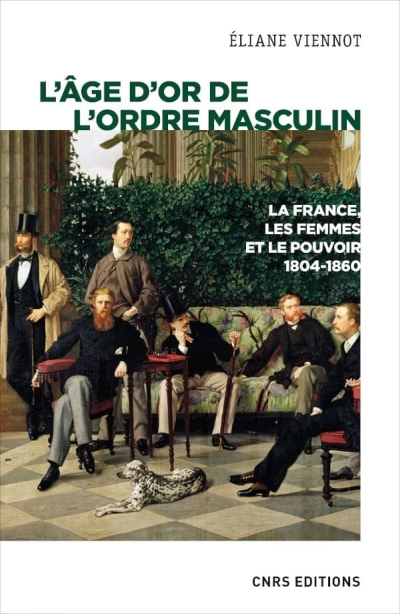
A system at its peak
This book describes the late 19th and early 20th century, a period when the patriarchal order was not just a custom, it was codified in law, science, and society.
This is the world Nettie Stevens (1861-1912) lived in. She didn't just face "sexism"; she faced a structured system, sure of its superiority, which considered her an anomaly.
Science, a "men's club"
As this book explains, science at that time was a pillar of the masculine order. It was used to "prove" women's intellectual inferiority and their "natural" place in the home.
In this context, the Matilda Effect was not an accident, it was a systemic necessity. Nettie Stevens' discovery, if recognized, would have contradicted the dominant ideology. Attributing it to Morgan was not a "theft", it was a "correction": the system put the discovery back in its logical place, in the hands of a man.
"Her erasure is not a personal failure, it is the success of a system protecting itself."
Excerpt from the Book
“If the Revolution, therefore, introduced changes, it was rather by aggravating already heavy trends: the separation of spheres between the sexes, the unequal distribution of wealth and power between those who reserved “public life” for themselves and those to whom they attributed “domestic life”. Assiduously theorized in the 8th century, this ideal was implemented in a few years, through laws, constitutions, elected assemblies (local or national), but also through a multitude of speeches, articles, pamphlets, essays, plays…” page 10
A legacy still present
This book is crucial. It gives us the "instruction manual" of the system that crushed Nettie Stevens. A system whose legacy, although weakened, is the same one Thelma and Louise confront in 1991, and which we still fight today.